Monday, August 12, 2024

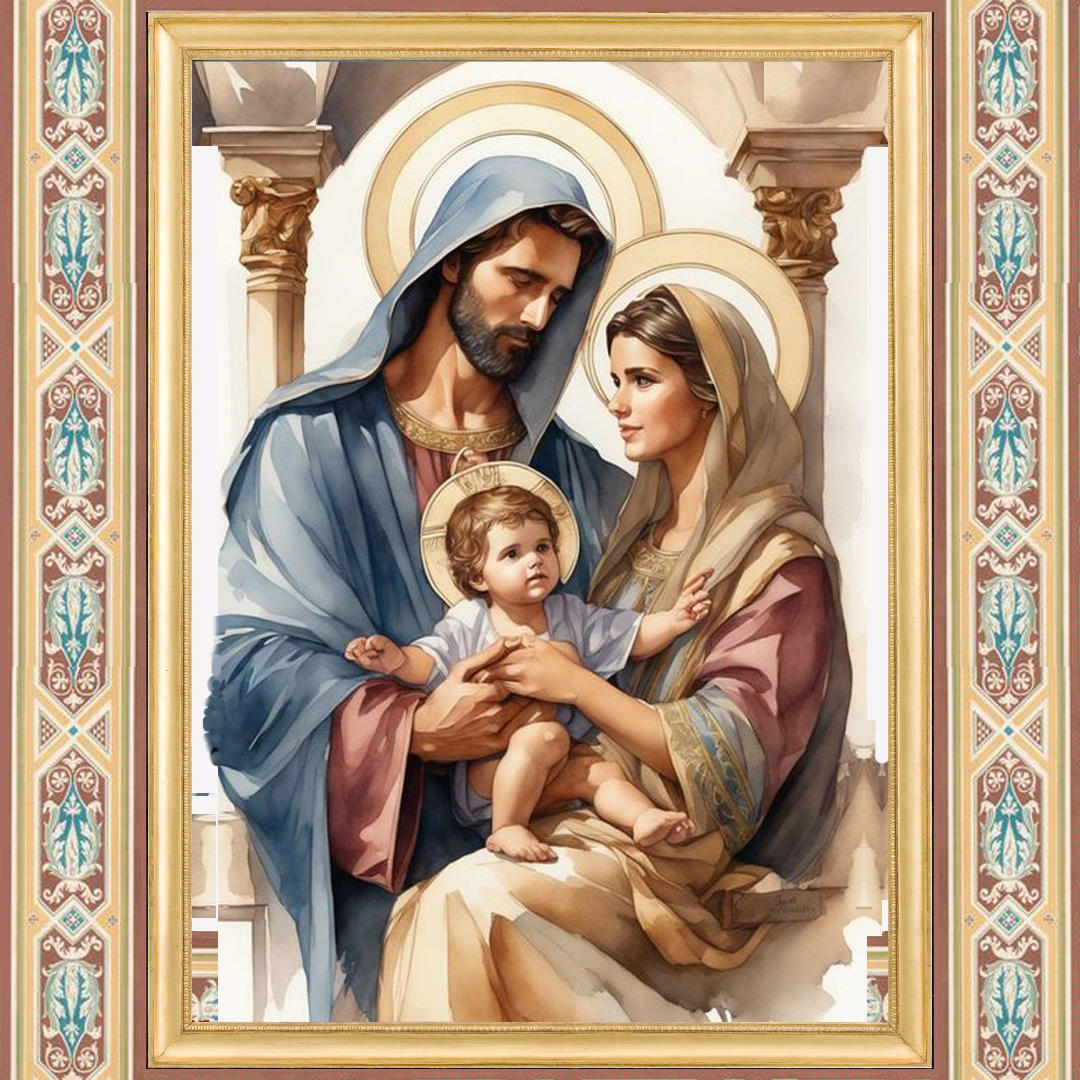
Aug 13 Tue - Should parents share responsibility in the upbringing of their children?


Aug 13 Tue
Should parents share responsibility in the upbringing of their children?
Here are seven helpful tips:

As Christian men, fathers have a moral duty to care for and love everyone in the family. Helping your children understand what "Father's love" is, will help them learn what God the Father's love is like.

1. Quality and quantity are both important.

Some people use the phrase "Quality is better than quantity" as an excuse. This is only partially true. When it comes to parenting and being present in your children's lives, both quality and quantity matter. Being present means spending time with your children.

2. Define the roles.

Just because both spouses have equal responsibilities doesn't mean they have to do the same things. Men and women are different, and these differences are necessary for the children. It's important to discover what your role is instead of just thinking about what is comfortable or comes naturally to you. Following traditional gender roles, where the mother pampers and cares and the father imposes discipline, may not be a good idea.

3. Put yourself in mom's shoes.

At times, adopt a more sensitive and emotional attitude, rather than always being rational or moral. Allow yourself to spoil your children a little. Women have innate qualities to talk, give advice on sentimental problems, help with homework, and more. Men also have a lot to offer, even if it may not come as naturally to them. Masculinity itself teaches respect, chivalry, care for the weakest, and authority.

4. Share the chores.

It's healthy to agree upon and alternate chores and housework. Having open conversations about this will not only avoid uncomfortable domestic quarrels, but it will also show your love for the house and leave a lasting impression on your children.

5. Be the head of the domestic church.

The Church encourages you to make your home and family a domestic church, where faith is celebrated, where you talk about God, and where you pray together. Men also have the responsibility to create this experience of a domestic church.

6. Speak loudly when necessary, but also be gentle and delicate when appropriate.

As the father, you may have a more authoritative role at home. However, discipline should always be an act of love and not a way to impose a regime of terror. Listen attentively to your children's requests and be flexible with them, just as God the Father is with us.

7. Be a role model in life.

The way you show affection to your spouse, the joy with which you do household chores, how you talk about others, how you live your faith and relationship with God, and of course, your relationship with your children—all of this serves as a model for them. Everything you do sets an example. That's why it's important to try to live according to what you say, living as a Christian not for the sake of appearances, but out of love for God and your children.

Video:


Sunday, August 11, 2024

Aug 12 Mon - Four traps that the devil whispers to stop you from praying, and how to respond.


Aug 12 Mon
Four traps that the devil whispers to stop you from praying, and how to respond.

The devil does everything he can to separate us from prayer. Let us remember some of the tricks he uses.

Trap number 1: Prayer is useless.

Indeed, prayer may seem useless, a waste of time.

However, we are mistaken when we give up praying because we have too much work to do. By doing so, we prioritize productivity over love. Often what seems most useless in our lives is also the most precious: cuddling a child, embracing our spouse, or contemplating a beautiful landscape. Similarly, prayer is both radically useless and fundamentally indispensable.

Trap number 2: You don't know how to pray.

The Tempter presents numerous arguments to convince us that prayer is too difficult for us, that it is a task for specialists, and that we should train ourselves before we can start praying. Once again, it is true that we may not know how to pray.

Our prayer may be filled with distractions, infidelities, subtle self-seeking, and countless other imperfections. So what? When a father cradles his baby in his arms and the baby babbles and smiles, does the father let go of the child and say, "You can only come to me when you know how to speak"? Of course not! On the contrary, the father marvels at and cherishes those awkward babblings. What holds for earthly parents also holds for God!

Trap number 3: You'll pray when you have time.

One thing is certain: if we wait until we have time to pray, we will never pray because there will always be urgent tasks to accomplish. If we intend to pray today but do not set aside a specific time for it, we run the risk of reaching the evening without praying.

The person who prays regularly is not the one with ample free time but who assigns time for prayer. It is a matter of choice: what are our priorities? Do we view prayer as an optional luxury? If it is a priority, it will have a significant place in our time management.

Trap number 4: Instead of praying, work.

In other words, if we worked wholeheartedly, there is no need to pray.

It is true that prayer and work together help us be in the presence of God, to be close to Him, and to serve Him. Thankfully! Otherwise, it would mean that we could only spend a small portion of our days with God.

Do I try to get close to God? Am I "connected" to Him? I must do His will, wherever He wants, whenever and however He wants. Whether it is when I'm preparing a meal, leading a meeting at work, or managing the accounts for my company, that is when I am closest to Him. One cannot pray "at all times" if one does not dedicate specific times for prayer.

So let us entrust our good intentions to Mary, whose prayer was perfect, to unite our work with our prayer and with our relaxation.
Excerpts from Christine Ponsard

Video:


Saturday, August 10, 2024

Aug 11 Sun - Why is the Lord the living bread that came down from heaven?


Aug 11 Sun
Why is the Lord the living bread that came down from heaven?

Two things are troubling the Jews: the notion that Jesus is bread, and the idea that he came down from heaven.

Regarding Jesus as bread:
We believe it, but those men might have understood Jesus' words metaphorically. They could have interpreted it as him merely bringing them some true gifts from heaven and eternal life. His miracles served as evidence, as he provided mental or physical healing, food for the hungry, wine for joy, and, most importantly, life again after death for a few.

As for him coming down from heaven:
We comprehend this, but the Jews might have seen "from heaven" as him being sent by God, similar to John the Baptist or one of the prophets. They may have believed that he was formed in his mother's womb to be a messenger of God. Once again, Jesus' teachings and miracles served as evidence for them to take this claim seriously. However, their argument was based only on their knowledge of Jesus' human ancestry and relatives. They knew St. Joseph and they knew Our Lady.

In response, Jesus answers, "No one can come to me unless the Father who sent me draws him," and "Everyone who listens to my Father and learns from him comes to me." These words could have been interpreted by them to mean that if they had an issue with Jesus, it was because there was something wrong in their relationship with God the Father.

Jesus in the Eucharist is the Bread of Life that came down from heaven, which we consume to obtain eternal life.

The celebration of the Eucharist in the Mass has been the center of the Church's life since Christ's command to "do this in memory of me."

During the Mass, the priest reenacts Jesus' actions and words from the Last Supper, serving as "the memorial of Christ, his life, death, Resurrection, and intercession in the presence of the Father."

By "memorial," we don't simply mean remembering. The memorial of the Mass is not like a funeral service or a national holiday commemorating an important event.

Instead, the Mass as a memorial means a real participation in the original event. To illustrate, consider how the Last Supper and the Passion of Christ are one event: during the Last Supper, Our Lord offered himself to the Father in a real, sacramental manner, and during his Passion in a real, physical manner. In the Mass, we are participating in that original unique event in a real, sacramental manner.

The Church requires the faithful to participate in the Divine Liturgy on Sundays and feast days and, prepared by the sacrament of Reconciliation, to receive the Eucharist at least once a year, preferably during the Easter season. However, the Church strongly encourages the faithful to receive the Holy Eucharist on Sundays and feast days, or even more frequently, such as daily.

Once one fulfills the minimum requirements, why not strive to do more?

Excerpts from Kevin Aldrich

Video:


Friday, August 9, 2024

Aug 10 Sat - Is humility the source of peace for the soul?


 Aug 10 Sat
Is humility the source of peace for the soul?
As Christians, we must be sowers of peace and joy. Peace is a consequence of humility. It is the inner harmony that comes from the awareness of our shortcomings as well as of God's gifts. Humble people are realistic in the interior struggle: they know they make mistakes, and admit them; they attribute to God alone the divine effectiveness of their labors.

“If you center your attention on yourself, you are not only taking the wrong road, but besides, you will lose Christian happiness in this life. You will lose that joy and cheerfulness which are nonetheless incomplete, because happiness will only be complete in heaven."

Pride takes away peace because it makes us live in a false world, far from God. If the soul imagines that it can achieve something unaided, then the failure that it is bound to experience causes it to be uneasy, restless, and anxious. Humility, on the other hand, leads us to God, and to his Son, Jesus Christ. And there we find peace.

The effort to acquire humility does not entail a brutal, tense, or anxiety-filled struggle; it means asking God to make us humble, and recognizing that in the concrete reality of our day, we can do nothing by ourselves, but with God's help we can do all things.

We must have peace in the interior struggle and in the face of difficulties. Yet “Getting closer to God, without a deep basis of humility, could lead to presumption, to the corruption of true hope, to pride, and, sooner or later, to spiritual ruin, on being faced with the unexpected experience of one's frailty."

“I usually give the example of the dust which is stirred up by the wind until, high in the sky, it forms a golden cloud, as it reflects the light of the sun. In the same way, divine grace raises souls very high, and we reflect all the marvel of goodness, wisdom, power, and beauty that is God. If we realize we are but dust and wretchedness - completely worthless - God will do the rest. This is something which greatly consoles me."

Neither should we get upset by exterior trials because, as St Augustine teaches, grace is given to those who hope in God. Cry out under the hand of the enemy. Ask God for his help. If there is one who fights against you, there is also one who fights for you, who looks down upon the battle and will come to your aid in the combat.

“We all make mistakes, even in areas where we have been fighting for years and years. If our ascetical struggle disheartens us, then we are proud. We must be humble, and we must want to be faithful. We are indeed unworthy servants, but with those unworthy servants God can do great things in this world if we, on our part, do one thing: if we make the effort to stretch out our hand and take the hand which God, with his grace, offers us from heaven."

Today, the Martyrdom of St. Lawrence on the grille.

Video:


Thursday, August 8, 2024

Aug 9 Fri - Should I persevere in the struggle to please God?


Aug 9 Fri
Should I persevere in the struggle to please God?
St Arsenius lived between the 4th and 5th centuries. He was a dignitary of very high rank in the Roman Empire. On one occasion, while he was praying to God to help him live a holy life, he heard a mystical voice telling him: "Get rid of your sinful attachments and you will be saved".

He did so and entered a monastery. But after he had become a monk, the voice told him: "Arsenius, be silent and pray in the silence of the chapel." So he did.
The monk grew in holiness, and the faithful travelled from far and wide just to listen to his teachings or some helpful advice. All this wisdom came to him from God.

St Arsenius once again heard the mystical voice commanding him: "Persevere in the struggle. Come, I want you to see what many people are doing". The obedient monk came and saw three scenes.

In the first scene, he saw a man chopping wood, tying it up in a heavy bundle, and trying to carry it on his back without success. Strangely enough, this prompted him to cut more wood and add it to the first bundle, only to try to carry it again without success. This action was repeated again and again.

He then spotted another individual drawing water from a well and pouring it into a nearby water tank. The tank had a hole in the bottom that connected to the well, so all the water immediately returned to the well, the source.

Later he saw two men on horseback trying to get a huge beam through the door of a church, sideways, in such a way that it would never fit. Nevertheless, the men insisted and insisted.

Later, the voice explained to St. Arsenius: "The man chopping wood is the example of those sinners who, instead of lessening the burden of their sins through prayer and penance, increase it, falling back into them and adding sin to sin.”

Then, he described to him that the subject who wanted to fill water in the tank with a hole symbolized “lukewarm people who do good deeds and bad deeds, without realizing that the merit they obtain every time they do something good is distorted and annulled and replaced by the loss of merit they incur when they do something bad.”

“Finally, these knights of the beam represent those who presume to be just and upright despite being inwardly full of pride, of being unforgiving, and of never yielding to anything or anyone.

“Those who behave in this way, as long as they do not change their attitude, will be condemned to remain outside the kingdom of God.”

Video:


Wednesday, August 7, 2024

Aug 8 Thu - Why should I genuflect in church?


Aug 8 Thu
Why should I genuflect in church?
If we were granted an audience with some high-ranking person, how carefully we would mind our behavior and manners! We have an audience with Jesus every day, an intimate personal conversation leading up to the total union of sacramental Communion. How do we receive him? How do we care for the basic details of piety?

“Piety has its own good manners -Learn them. What a pity to see those "pious" people who don't know how to behave in Mass or how to make the sign of the Cross (they make weird gestures, all in a hurry), or how to bend the knee before the Tabernacle (their ridiculous genuflections seem a mockery), or how to bow their heads reverently before a picture of our Lady."

Genuflection is a gesture of adoration reserved for the Most Blessed Sacrament and the Holy Cross. It signifies the adoration owed to Christ truly present in the Eucharistic.

We must know the reason why genuflection was established, its meaning, and form of doing it. Thus, take into account:

1. Genuflection

The word genuflection comes from the medieval Latin genuflexĭo: gĕnu (knee) and flexĭo (flexion). It is done by bending the right knee to the ground.  
It was a sign of respect, in the West, given to kings and nobles during the Middle Ages. However, they were respected by bending the left knee. This is why Christians bend the right knee as a sign of devotion to God alone.

2. Single or double genuflection?

In the past, Catholics genuflected with two knees before the exposed Blessed Sacrament. Thus, they bent the right knee until it touched the ground and then the left knee. The person then stood up, raising the left knee first.

Presently, we are told that only simple genuflection is needed before the Blessed Sacrament, whether reserved in the tabernacle or exposed for public adoration, except when in a procession.

Thus, double genuflection is not obligatory in an exposition of the Blessed Sacrament, but many continue to practice it out of personal devotion.

3. At what other times do we genuflect?

Genuflection is made when entering and leaving the church, always facing the tabernacle, to greet and bid farewell to Christ the Eucharist.
The way to know that ‘the presence of Christ’ in the tabernacle is when the vigil lamp is lit at the side.

Genuflection before the Cross is only performed ‘from the solemn adoration in the liturgical action of Good Friday at the Passion of the Lord until the beginning of the Easter Vigil’.

4. Does genuflection pleases the Lord?

St. Ambrose, one of the greatest Doctors of the Church, said: ‘When the knee is bent, the offence to the Lord is eased, His anger is appeased, His grace is brought forth’.

Therefore, the gesture of genuflection is a beautiful way to express our faith in the Eucharistic presence of Christ and our love for Him.

Video:


Tuesday, August 6, 2024

Aug 7 Wed - Why do I always want to have more?


Aug 7 Wed
Why do I always want to have more?
Due to original sin, we all have a disordered desire for earthly possessions.

Our life on earth is a journey towards love: love for God and love for all souls, whom we want to bring closer to God. However, because of original sin, our human will tends to prioritize self-love and seek personal satisfaction in material possessions, even if it goes against God's will.

When our attraction to material things is properly ordered and controlled by reason, it can serve to meet the legitimate needs of human nature.

However, often under the guise of these needs, we start desiring what is not appropriate. Therefore, we must always be cautious of the tendencies that can separate us from God. This is particularly important in today's society, where many people associate happiness with the use and enjoyment of material possessions.

St. Josemaría wrote, "The battle we face is within ourselves, the battle of our passions. A vigilant soul constantly fights against occasions of sin or anything that weakens faith, erodes hope, or debases love. Let us not forget that sin, which the old theological masters defined as turning away from God and turning towards creatures, begins to infiltrate the soul through disordered attachments and a tendency to indulge in the pleasures of this world, to the point of forgetting about God and our purpose in life.

Nowadays, there is a widespread tendency to make everything revolve around man. We live in a materialistic environment that disregards man's transcendent vocation and cruelly stifles the freedom of the individual or at least confuses freedom with permissiveness, all the while commercializing human desires. It is disheartening to see masses of people allowing themselves to be dictated to by a few individuals who impose their own doctrines, myths, and a completely secularized ritual."

"We must fight against this tendency with the resources of Christian doctrine, through persistent and global catechesis..."

"Remember that the internal struggle cannot be reduced to mere human asceticism. It is the natural consequence of the truths that God has revealed about Himself, our human condition, and our mission in the world. Without this internal battle, without sharing in our Lord's Passion, no one can truly follow the Master. Perhaps that is why we are witnessing this shameful stampede. Many people seem to think they can lead a purely worldly lifestyle while also following Christ - without the Cross and without suffering. However, this is only possible by fundamentally altering the message of our Redeemer, because a disciple is not above his Master; a disciple of Christ must be ready to deny oneself and lose one's life for the salvation of others."

Video:


Monday, August 5, 2024

Aug 6 Tue - If I try to be humble, will I destroy my personality?


Aug 6 Tue
If I try to be humble, will I destroy my personality?
“To be humble does not mean to go around dirty and unkempt. It does not mean being indifferent to everything around us and constantly failing to exercise our rights. Much less does it mean to go around proclaiming silly things about ourselves. There can be no humility if we are theatrical or if we are hypocrites because humility is truth."

We must be on our guard against any form of pride that tries to disguise itself as humility. In the words of St Jerome: “It is one thing to be virtuous, and quite another to appear to be virtuous. There is no worse pride than that which hides under the appearance of humility." St. Josemaría gives us a reliable test to recognize it: “Are you truly humble? Can you mortify your self-love, for the sake of charity? Can you accept those humiliations which God asks of you, in unimportant things which don't obscure the truth? What is it that makes charity sluggish? Quite simply, pride. So, ask our Lord to grant you humility, because if pride is not taken in hand promptly, with time it only gets worse."

“Despite the limitless goodness of God our Lord, he will not be able to sanctify us or save us without our consent and our will. And without him, neither will we accomplish anything worthwhile. And he is the one who confers on a withered twig the power to take root. Humility is knowing that neither he who plants nor he who waters is anything, but only God who gives the growth."

Humility, then, is the fruit of knowing God and knowing ourselves. Self-knowledge enables us to know the good things God has done in us but which do not belong to us. We belong to the Lord; all the good we have is his.

Only through humility can we produce lasting fruits. I read in an old spiritual book, St. Josemaría told us, “that trees that have very high, upstanding branches do not have much fruit. On the other hand, trees with low, fallen branches, are full of rich, delicious fruit. And the closer they are to the ground, the more abundant the fruit is. “My children, ask for humility which is such a precious virtue. Why are we so foolish? We are always so convinced that our way is the best and always sure that we are right. The soul soaks up vanity and pride like a lump of sugar soaking up water. If you want to be happy, be humble. Reject the deceitful insinuations of the devil when he suggests that you are so wonderful. You and I have understood that, unfortunately, we amount to very little. But when we take our Lord into account, it's another story. We owe him everything."

Video:


Sunday, August 4, 2024

Aug 5 Mon - Mary, Untier of Knots (Undoer of Knots).


Aug 5 Mon
Mary, Untier of Knots (Undoer of Knots). St. Irenaeus (born ca. A.D. 130) wrote about the Incarnation of Christ: “Luke, commencing the genealogy with the Lord, carried it back to Adam, indicating that it was He who regenerated them into the Gospel of life, and not they Him. And thus, also it was that the knot of Eve's disobedience was loosed by the obedience of Mary. For what the virgin Eve had bound fast through unbelief, this did the virgin Mary set free through faith.”

The devotion to Our Lady as one who "unties knots" has its deep origins in this truth. Eve, the mother of all born, sinned and tempted her husband. What Eve knotted up, Mary loosens (EVA becomes AVE).

The painting depicts the Virgin surrounded by angels and standing on a serpent, as foretold in Genesis 3:15. In her hands, she holds a knotted ribbon which she patiently untangles.

In English, Our Lady in this style is known as "Untier of Knots," "Undoer of Knots," "Mary who Unties the Knots". She is always there, as your Mother, to help you "untie the knots" present in your life – the problems that harass and trouble you, the sins that hold you back, the addictions that plague you.

Pray to her:
Mother of Fair Love, Mother who never refuses to come to the aid of a child in need, Mother whose hands never cease to assist your beloved children, cast your compassionate eyes upon me and untie the snarl of knots that exist in my life.

You know very well how desperate I am, my pain and how I am bound by these knots. Mary, Mother to whom God entrusted the undoing of the knots in the lives of His children, I entrust into your hands the tangled ribbon of my life. No one, not even the evil one himself, can take my life away from your precious care. In your hands there is no knot that cannot be undone.

Powerful Mother, by your grace and intercessory power with your Son, Jesus, take into your hands today this knot (mention your intentions). I beg you to undo it for the glory of God.

O my Lady, you are the only consolation God gives me. My hope is in you, the strengthening of my feeble strength, the enrichment of my destitution, and through Christ, the freedom from my chains. Hear my plea. Keep me, guide me, protect me, O safe refuge! Mary, Undoer of Knots, pray for me. Amen.

Video:


Saturday, August 3, 2024

Aug 4 Sun - Choosing Life in Christ.


Aug 4 Sun
Choosing Life in Christ.
When the crowd saw that neither Jesus nor his disciples were there, they got into boats and came to Capernaum looking for Jesus.

The crowds behave like the merchant who found a pearl of great price, or the man who found a treasure buried in a field. They were like a man in love looking for his beloved. They had discovered Jesus and wanted him, but they didn’t really know him yet.

They wanted from him perishable food—which he could give them—but he could also give them –and is willing to give us– food that “endures for eternal life” and will fully and always satisfy hunger and thirst.
He himself gives it to us. This food is He.

But we must “work for” this food that is imperishable and makes us imperishable. The work is to believe in Jesus Christ.

For all of us who say we are Catholics, there seem to be three options available to us when it comes to how we lead our lives.

The first way we can lead our lives is to do whatever seems beneficial to us. This is attractive, but our twisted tendencies incline us to want what is not good and to act badly to get it. This is the way of the “cafeteria Catholic” who picks and chooses by himself what doctrines of faith or morals to embrace or reject.
However, the analogy that says the faith is like a cafeteria is not the best because everything in a cafeteria is real food and drink, while our rejection of Catholic faith and morals may be deadly poison. Remember that our moral decisions lead us to either salvation or destruction.

The second way we can live is by way of obligation. We try to do everything the Church asks of us out of obedience to obligation. We go to Mass because the Church says we have to. We go to Confession because we are supposed to. We don’t commit some sin because we are afraid of going to hell. This is good but insufficient.

Initially, it may be very good for us to put ourselves under obedience as a good discipline to get our lives in order.
Thus, when our emotions and passions incline us to all kinds of evil, we should do what our faith and reason tell us is right, even though our desires say something else. This is rejecting the “old self.”

The third way we might live is perfect. It is doing what the Blessed Trinity wants us to do, freely, as a child of God, assisted by the abundant graces we receive in the Sacraments and the gifts of the Holy Spirit. It is living as a friend of God.

This third way can apply to everything we do all day long every day. It can be phrased as, “I choose to do X because I am a friend, a child of God.”
This is choosing life in Christ.

Video:


Friday, August 2, 2024

Aug 3 Sat - Five Obstacles to Attaining Purity of Heart


Aug 3 Sat
Five Obstacles to Attaining Purity of Heart
Jesus taught this message with utmost clarity in the Sermon on the Mount, starting with the Beatitude: "Blessed are the pure of heart, for they will see God." (Mt. 5:8)

1. Our Three major obstacles
   - the devil,
   - the flesh,
   - and the world, that is, wrong examples or lifestyles.
The world strives to present to us glamour, immodesty, impurity, and sexual license as totally normal and acceptable.
Yet as a result of Original Sin, we are conceived and born with concupiscence and a tendency toward sin. Among these is that of the Capital Sin of Lust which can be defined concisely as: "A disordered desire for sexual pleasure."

2. Immodesty
Immodesty in all forms is the gateway by which many sins of impurity are unfortunately committed.

3. Phones, Social Media, & the Internet
All of these can be used for the honor and glory of God—for preaching the Good News of the Gospel, as efficacious tools for evangelization, as the means to convert and save souls. But they can also be used for incalculable evil.

4. Pornography
By far, it is the most pervasive, influential, and dominant vice and addiction. Its influence is devastating, to say the least.
What then are the common effects of porn use?

a) Persons Become Objects

b) Polluted Mind
Instead of looking up to heaven, the individual focuses their eyes and attention on the lowly, earthly, and sordid, aspects of life.

c) Escalation
The more porn is viewed, the more one desires to view it.

d) Desensitization
The porn-viewer becomes more and more desensitized to what is pure, noble, good, and worthy of praise. Their mind, heart, and emotions become calloused and hardened.

e) Addiction
Seen as the modern drug, porn can be more powerful than addiction to certain drugs.

f) Acting Upon Images
Addiction to pornography can easily lead to actual sins against purity.

g) Breakup of Families
Many families have been torn apart due to the use of porn.
A married man who is purposely viewing pornography is committing an act of unfaithfulness, an act of mental and emotional adultery against his wife.

h) Hatred for God
Those who have given themselves totally to the sin of lust and impurity end up hating God.

i) Sadness
When innocence has been destroyed due to exposure to and usage of porn, joy disappears.

j) Danger of Eternal Loss
Once a person is into the vice of porn and impurity, there is a real possibility of losing the Vision of God for all eternity.

5. The Hook-Up Culture and Premature Courtships
Early, and immature courtships easily go against the virtue of purity
Sadly, the whole idea of living together, trial marriage, and cohabitation, corrupts the person and the whole society.

Conclusion
The remedies? The sacraments, prayer, and sacrifice.
Excerpts from Fr. Ed Broom

Video:


Thursday, August 1, 2024

Aug 2 Fri - Today is Our Lady of the Angels


 Aug 2 Fri
Today is Our Lady of the Angels. St. Josemaría taught us to have a “great devotion to holy Mary our Mother under all of her titles, as Christians try to show their affection when they approach the Savior's Mother, who is also our mother."

“Many Christians have the custom of wearing the scapular, or they have acquired the habit of greeting those pictures—a glance is enough—which are found in every Christian home and many public places; or they recall the central events in Christ's life by saying the rosary, never getting tired of repeating its words, just like people in love; or they mark out a day of the week for her..., doing some special little thing for her and thinking particularly about her motherhood." The scapular of our Lady of Mount Carmel should be one of our Marian customs.

On July 16, 1251, the Blessed Virgin appeared to St Simon Stock, the superior general of the Carmelite Order, promising a special blessing for all who wear her scapular. Since then, the Church has solemnly and repeatedly approved this devotion. Instead of the cloth scapular, people may wear a properly blessed scapular medal with the depiction of Jesus with his Sacred Heart, and Mary on the obverse. The Sabbatine privilege consists of the intercession of our Lady to take the soul of the scapular wearer to heaven on the first Saturday after his death.

It is also a sign of three entwined elements: a) belonging to the Church’s ‘family,’ b) consecration to and trust in Mary, and c) an incentive to imitate our Lady’s virtues, especially her humility, chastity, and prayerfulness.

We need our Lady's motherly assistance throughout our earthly pilgrimage. Left to ourselves we run the risk of losing our way. But with her powerful protection, we can walk safely. To look upon our Mother truly consoles and guides us. Our faith, hope and charity are strengthened, along with all the other virtues. Our sights are raised above the bounds of our earthly existence, beyond the limits of the present time.

The scapular is a sign, a material token of Mary's protection. Just as trophies and medals are used as souvenirs and signs of friendship or victory, we see in the scapular a loving reminder of the Blessed Virgin.

We must have confidence that our Lady of Mount Carmel will help us at the hour of our death, and pray:
“Mother, may your Scapular bring me your special protection in my daily struggle to be faithful to your divine son and to you. May it separate me from all that is sinful in life and remind me constantly of my duty to imitate your virtues. From now on, I shall strive to live in God's presence, and offer all to Jesus through you."
“Dearest Mother, support me by your never-failing love and lead me to Paradise through the merits of Christ and your intercession."

Video: