Wednesday, July 3, 2024

July 4 Thu - What is the link between the Blessed Trinity and the Mass?


July 4 Thu
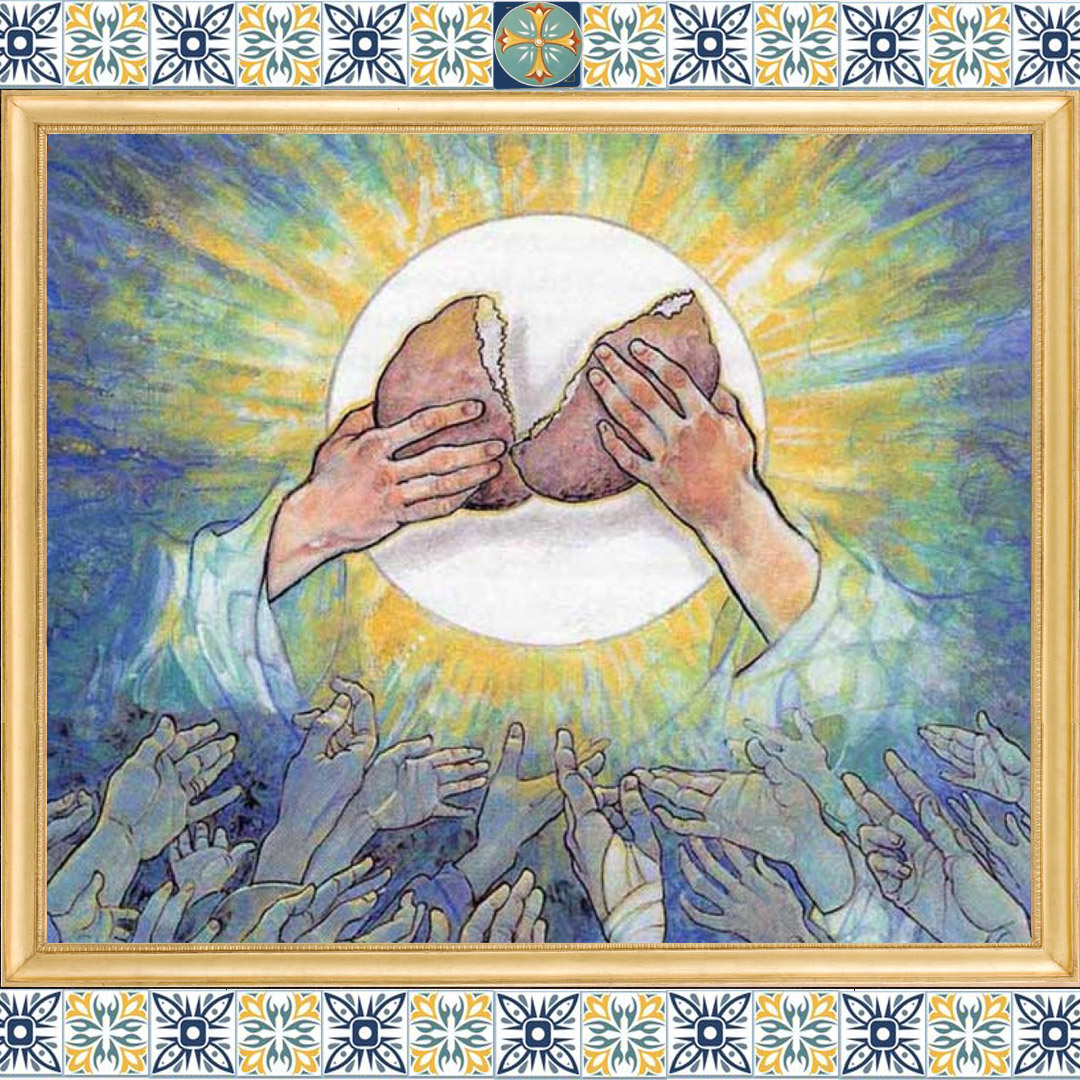
What is the link between the Blessed Trinity and the Mass? The liturgy, especially the Holy Mass, nourishes our devotion to the Trinity.

All the Church's liturgy is an act of homage to the Blessed Trinity. Likewise, our interior life and our struggle for holiness are guided by the action of the Trinity in our soul. We know that we are children of God the Father, and that the Holy Spirit is sanctifying us by making us more like God the Son. And indeed, it is in the liturgy, this great work in which God is perfectly glorified and men are sanctified.

In the Holy Mass, which is the center and root of our interior life, we have the opportunity to grow daily in our love for the Blessed Trinity. The Mass, as St. Josemaría taught, is the most splendid manifestation of the Blessed Trinity's love for us. The Holy Sacrifice is in truth “the holocaust that will give to the holy name of God the glory that is due. The sanctification we pray for is attributed to the Paraclete, who is sent to us by the Father and the Son ... The three divine Persons are present in the Sacrifice of the Altar ..."

“The Eucharist is the goal of all the sacraments. The life of grace, into which we are brought by baptism, and which is increased and strengthened by confirmation, grows to its fullness in the Mass. "When we participate in the Eucharist," writes St Cyril of Jerusalem, "we are made spiritual by the divinizing action of the Holy Spirit, who not only makes us share in Christ's life, as in baptism, but makes us entirely Christ-like, incorporating us into the fullness of Christ Jesus."

This outpouring of the Holy Spirit unites us to Christ and makes us acknowledge that we are children of God. The Paraclete, who is Love, teaches us to saturate our life with the virtue of charity. Thus, made one with Christ, we can be for others what the Eucharist is for us, in the words of St Augustine: a sign of unity, a bond of love."

Every day we can unite ourselves to Christ's sacrifice, and, through his mediation, offer our whole existence to God the Father in the Holy Spirit. And in our daily work, we remember that our life is just that: a continual offering made to God. The efforts we make will bear fruit, with God's grace, if we have recourse to our Lady. “Throughout the day you can often hold a conversation with the trinity on earth, which is the way to reach the Trinity in heaven. Bear in mind, what St. Josemaría advises us, that the Mother leads us to the Son, and the Son, through the Holy Spirit, leads us to the Father, according to those words of his: he who has seen me has seen the Father."

Video:


Tuesday, July 2, 2024

July 3 Wed - Why is the Church compared to the dawn?


July 3 Wed
Why is the Church compared to the dawn?
Since the dawn transitions from darkness to light, the Church should be referred to as the "dawn" or "first light." As she guides us from the darkness of disbelief to the light of faith, she leads us toward the radiance of heavenly brightness, just as dawn breaks into day after darkness. The words from the Song of Songs capture this accurately: "Who is she who is coming up like the dawn?" The holy Church seeks the rewards of heavenly life and is rightfully called the dawn because she dispels the shadows of sin and shines in the light of holiness.

The dawn, or first light, proclaims that the night is over but does not yet reveal the full brightness of the day. It dispels night, it gives a beginning to the day, yet it is a combination of light and darkness. Are we not all like the dawn, those of us who seek and follow the truth in this life? Some of our actions are truly deeds of light, while others still bear traces of darkness. As the psalmist proclaims, no one is virtuous before God, and Scripture reminds us that we have all sinned in many ways.

This is why St. Paul does not say, "The night has passed and the day has come," but rather, "Night has passed and the day is approaching." This unequivocally demonstrates that he is still in the dawn, after the end of darkness but still anticipating the rising of the sun.

The Church will only resemble the fullness of day when the darkness of sin no longer exists among her members. She will truly be like the day when she radiates the perfect warmth of an inner light.

God illustrates that we are still experiencing this dawn when he asks Job, '"Have you ever commanded the dawn to its place?" Something that is being sent somewhere is transitioning from one place or state to another. The perfect brightness of eternal vision is the ultimate destination of the dawn, and the Church.

And when the Church reaches her destination, will she still retain any trace of the darkness that has passed? Like the dawn, she eagerly seeks to reach her destined place. Thus, the psalmist yearns, "My soul thirsts for the living God; when shall I appear before the face of God?" The Church, hurrying towards her known destiny, echoes this sentiment when Paul expresses his desire to die and be with Christ, declaring, "For me to live is Christ and to die is gain."
From The Moral Reflections on Job by Pope St Gregory the Great

Video:


Monday, July 1, 2024

July 2 Tue - The Ten Commandments for Happiness


July 2 Tue
The Ten Commandments for Happiness
- Assume that you are terminally ill: you have little time left, even if you are young. - -- Accept your uselessness and your fragility.
- Like a sick person, like a sinner, ask God for help, every day. Go to him, "It is not the healthy who need a physician, but the sick".
- The root of your condition is pride and its offspring: vanity, pride, egoism.
- Accept, moreover, that you are blind because of so many attachments. Cry out to God with all your strength and with all your heart, to help you get out of them.
- God will heal you little by little: by painful humiliations that will come with each passing day.
- Accept the treatment as best you can. Be patient –it can last for years. Complain and cry as much as you want…to God.
- Do not seek refuge in "esoteric spirituality": it is only a grammar. Worse still, it is an ideology and a disguise for pride.
- Seek refuge and comfort in God alone. Imagine yourself resting your head on His chest, cared for by the Virgin Mary.
- Abandon all worry for the future. Convince yourself that you can, and will, die at any moment. Go to Mass; even if you understand nothing, the devil trembles.
- Only when you feel the need to hide and disappear, to suffer for God and for your brothers in silence, will you be as happy as you can be in this life, because you will no longer be afraid of death.

All these points are summed up in one: make yourself small, never grow into anything, become a child. Grow strong by being a little child of God.

Run away from "false spiritual teachers" and "gurus". Be suspicious of anyone who wants the limelight and justifies it. Remember: Jesus lived in hiding for thirty years.

And what will cost you the most: let them scold you unjustly and do not excuse or justify yourself.

If you do not know how to pray, simply repeat calmly: "Jesus, Son of God, have mercy on me, a sinner". Repeat it at all times, everywhere.
Some excerpts from Francisco Segarra

Video:


Sunday, June 30, 2024

July 1 Mon - “I would rather die or resign,” is how Paul VI settled the question of celibacy


July 1 Mon
“I would rather die or resign,” is how Paul VI settled the question of celibacy with Cardinal Alfrink.

On January 28, 2019, during the flight back from his trip to Panama for World Youth Day, Pope Francis was asked about priestly celibacy.
According to Msgr. Sapienza, the Pope replied, “In the Latin rite, a phrase of St. Paul VI comes to mind: ‘I prefer to give my life rather than change the law of celibacy.’ It was a courageous phrase in a more difficult time than this, it was in the years 68-70”.

‘The Tablet,’ 50 years ago, published in an article:
“The Pope… urged all the Dutch bishops to defend the celibacy rule at the council, and expressed strong concern at some of the trends evident in the Church in the Netherlands … less than a week after the Dutch Pastoral Council voted in favor of making celibacy an optional choice and admitting women to the priesthood."

Instead, Paul VI asked Cardinal Alfrink and the bishops “to express serenely, without any reticence, your total agreement with the universal Church on the contested points.” Priestly celibacy, he said, was an “incomparable treasure” of the Latin Church and the bishops should “make known and support the indispensable conditions for its exercise.”

Then, the Dutch prelate pointed to the lack of vocations. “The Holy Father said, No. It should not be done. I would think I was betraying the Church.”

When the cardinal mentioned to him the “quality” of married men who might be candidates, Paul VI replied, “Let them do lay apostolate.”

Alfrink understood that he would not get a positive answer that same morning, but the Pope told him that he did not want to give “false” hope, and that “his conscience would not be clear.” “It would be to disjoint the discipline of the Latin Church”.

Then, Alfrink asked him if he feared that, if permitted, there would no longer be a celibate clergy.
The Pope replied, “We would have priests absorbed by other tasks, family, work...” The Dutch bishop admitted that outcome and said that one of the reasons for celibacy is “availability,” being “completely free” for the mission.

“You cannot have a double clergy” (one married and one not), Paul VI said.

– “I think likewise”.

“It would be ruinous. I would rather die or resign!” Paul VI concluded.

Msgr. Sapienza ended by revealing that Francis said: “I think the same as St. Paul VI, but with one difference: that he is a saint”.

Video:


Jun 30 Sun - The Christian Meaning of Death


Jun 30 Sun The Christian Meaning of Death. The Church teaches that God has created man for a purpose beyond earthly sufferings. According to the Church, man is called by God to be united with Him in an eternal sharing of divine life, free from corruption. 

Christ achieved this victory by rising from the dead and freeing man from death. Hence a solidly established faith gives him the power to be united in Christ with his loved ones who have already been snatched away by death; faith arouses the hope that they have found true life with God. 

However, Jesus did not come to eliminate all suffering on Earth. He came to free humanity from the greatest slavery, sin. Sin prevents us from fulfilling our calling as children of God and leads to various forms of bondage. 

Through Baptism, the Christian has already 'died with Christ' sacramentally, to live a new life; if we die in Christ's grace, physical death completes this 'dying with Christ.' 

Christian life involves dying to our sinful desires and living according to what is truly good. This is made possible by the grace that God showers upon us. 

 In the face of death, the truth that "here we have no lasting city" becomes evident. Lack of understanding, persecution, and loneliness remind us of this truth. Even though we may be surrounded by loved ones, every person ultimately dies alone. 

Life is short, time is limited, and our time on Earth is a treasure, the "money" with which to buy eternity. Our days will come to an end, and we'll be judged by our deeds. Nothing on earth has permanent value. All that this earth can offer us is continually passing away: hardly has pleasure begun than it is already ended. God will come for us only once. He should find us well prepared to enter happiness without end. 

 "Now is the time to untie all the bonds that bind us. Let us prepare ourselves at all times for that step which will bring us into the eternal presence of the Most Holy Trinity." 

How can we be ready for death? 

One way is the nightly examination of conscience and frequent sacramental Confession. 

Another is to pray from time to time a prayer for the acceptance of death. 

Here is one example: "Most Sacred Heart of Jesus, I accept whatever kind of death you choose to send me today, with all its pains and sorrows, as reparation for my sins, for the souls in purgatory, for the conversion of sinners, for all those who will die today, and for your greater glory. Amen." 

Another is to stay close to Our Lady and St. Joseph. Recall that in every Hail Mary, we ask the Blessed Virgin Mary to "pray for us sinners, now and at the hour of our death."

 Joseph is the patron of a happy death because he died in the presence of Jesus and Mary.

Video:


Friday, June 28, 2024

Jun 29 Sat - What if we conducted an ultrasound test on Jesus' Heart?


Jun 29 Sat
What if we conducted an ultrasound test on Jesus' Heart?

The Beatitudes would be the result of Jesus’ heart ultrasound, providing insight into what lies within. To truly follow Jesus, we must reproduce His sentiments and basic attitudes in our hearts. The Beatitudes are, also, the response to humanity's natural longing for happiness, a desire that God has placed in every human heart to draw us closer to the One who can truly fulfill it.

Once we recognize that beatitude (i.e., heaven, everlasting happiness) is the ultimate goal of humanity, the next question arises: "What are the means to achieve it?" or "How do I fit into this picture?" Specifically, we must consider which human goods to pursue and which actions to perform to reach this end.

The answer lies in living out all the moral implications of the Christian faith, explicitly and consciously (with the help of God's grace), to achieve integral fulfillment in Christ and thereby attain goodness. Therefore, true happiness for humanity lies in self-fulfillment and the attainment of the purpose for which we are created. Our happiness is directly connected to our sense of responsibility in fulfilling God's Will and achieving goodness.

The Beatitudes are precisely the "modes of Christian response" and are accompanied by their corresponding virtues.

"Blessed are the poor in spirit, for theirs is the kingdom of heaven." This calls for us to expect and accept all good things, including the fruits of our labor, as gifts from God. The virtue associated with this is humility, which enables us to cooperate with God.

Blessed are the meek, for they shall inherit the earth. Accept God's will; be a team player on God's team. Accept your limited role in the body of Christ and fulfill it. The related virtue is meekness, to accept and embrace one's mission in life or vocation.

Blessed are those who mourn, for they shall be comforted. Put aside or avoid whatever is not necessary or useful in fulfilling your vocation. The related virtue is detachment.

Blessed are those who hunger and thirst for righteousness, for they shall be filled. Endure fearlessly whatever is necessary or useful in the fulfillment of your vocation. The related virtues are endurance in the struggle, faithfulness, and courage.

Blessed are the merciful, for they shall obtain mercy. Do not judge persons according to your feelings. The related virtues are fairness and forgiveness.

Blessed are the pure in heart, for they shall see God. Strive to conform your whole self to a living faith, and recognize and purge anything that does not meet this standard. The related virtue is purity of heart.

Blessed are the peacemakers, for they shall be called sons of God. Respond to evil with good, not with resistance, much less with destructive action. The related virtue is that of the rebuilders of damaged relationships.

Blessed are those who are persecuted for righteousness’s sake, for theirs is the Kingdom of heaven. Do no evil that good might come of it, but suffer evil together with Jesus in cooperation with God's redeeming love. The related virtue is doing good even though it may produce hatred.

Vdeo:


Thursday, June 27, 2024

Jun 28 Fri - Should I strive to please God in everything?


Jun 28 Fri
Should I strive to please God in everything?
This is a good summary of Christian life: Grant, Almighty God, that with our thoughts always on the things of the Spirit, we may please you in all that we say and do.

Jesus spent his whole life on earth fulfilling God's will. My food, he told his disciples, is to do the will of him who sent me, and to accomplish his work. This is what we should do, following the teaching and example of Christ, so that we might attain the holiness to which God calls us.

St. Josemaría: “My children, I recently read in the holy Mass a prayer that is, as always, a splendid jewel, crafted from the most precious metal and set with the finest pearls. In it, we ask God: that we may always think what is right and reasonable, and so be pleasing to you both in words and deeds. How wonderfully Christian it is to ask God to give us the grace to act in a way that pleases him. And what is it that pleases our Father God? That we should be happy."

“We are unhappy when we foolishly separate ourselves to follow the promptings of the fomes peccati (the "tinder of sin", the concupiscence) that we all carry within us. Besides, there is the attraction of what people call the world, which isn't the world that we love passionately. Then there is the constant activity of the devil, and the downward tug of the flesh. And this goes on throughout life."

“When you consider the prospect of the struggle that lies ahead, the sole aim of which is to please God in everything, don't think that God always is going to ask you to make superhuman efforts. With the help of grace, everything is easy. Besides, for most people, there are many times, long periods, when we don't encounter special difficulties, because we realize that our dedication is worth all the effort involved. But there are times when the triple concupiscence - the lust of the flesh, and the lust of the eyes, and the pride of life - blinds and confuses us, and leaves us stupefied. And then everything starts to be difficult, and the joy we felt on other occasions, the joy of being a holocaust and of burning ourselves on God's altar each day as we draw near to strengthen our youth: that joy disappears."

Today we tell Jesus once again that we want to fulfill, always and everywhere, the holy will of God. “I have trusted in your steadfast love; my heart shall rejoice in your salvation. I will sing to the Lord because he has dealt bountifully with me."

Video


Wednesday, June 26, 2024

Jun 27 Thu - Why did Jesus institute the Blessed Eucharist?


Jun 27 Thu
Why did Jesus institute the Blessed Eucharist? St. Josemaría told us: “It's like a man saying goodbye when duty calls him away from home; he has to go, and yet he wants to stay with the people he loves. He leaves them a photograph of himself, writing on it words of such burning love that they practically set fire to the paper. That is the most he can do, because for us human beings, where there's a will there isn't always a way. But what we can't do, God can. He goes away and yet he stays with us: so that we can eat him, and make ourselves one thing with him. Almighty God, you have made me understand the madness of love of the sacred Host."

Under the consecrated species the whole Christ is hidden, God and Man, the living bread which, because it is living, has the power to give life to those who receive it. Christ's Real Presence gives the Eucharist infinite supernatural effectiveness because it contains what is absolutely sacred, namely, Christ himself.

We must get rid of the obstacles that stand in the way of our Lord's presence in our souls. Our Lord waits for us to sanctify us so that we can be identified with Himself. This union marks our soul with the seal of Christ, making us progressively more like him, and leading us, through total identification with his Passion, to the summit of holiness.

There are real obstacles that make our union with our Lord less than complete, and prevent the Sacrament from having its full effect.

We must discover and root out the obstacles to grace. If we do, our Communions will have still more effect, bringing us more rapidly to perfect union with Jesus.

To receive Jesus Christ worthily we need certain habitual dispositions of both body and soul, which will prepare us for the moment of union we desire.

Preparation of our soul in the first place; it implies living in God's presence all day long; struggling to fulfill our daily duties as well as we can; and, when we commit some fault, feeling the need to ask our Lord's forgiveness and even to go to sacramental Confession if necessary. We prepare by filling our day with acts of thanksgiving and spiritual communions, so that “our life may be one of thanksgiving for having received him, and preparation to receive him again."

If our soul is in love, we will find that, in our work, our family life, and everything else, our heart is set on our Lord. The nearer we come to the moment of Communion, the more our desire to receive Christ should increase.

As well as preparing our soul, we also prepare physically, with the fast prescribed by the Church as a sign of respect and reverence, and by taking care of our appearance to come worthily to the greatest wonder in the world.

Video:


Tuesday, June 25, 2024

Jun 26 Wed - Peace and ascetical struggle.


Jun 26 Wed
Peace and ascetical struggle.
We must give our whole life to our Father God. Inspired by our filial love, we try not to refuse him anything. Everything in our lives is brought together and illuminated when we realize we are children of God. Peace governs our lives due to the calm and order in our hearts. No difficulty, however great, can take this peace away, since if God is for us, who is against us?

“And what is peace? Peace is something closely related to war. It is a consequence of victory; peace demands a continual struggle on my part. Without fighting I will never have peace."

The peace that Christ offers us is not just a comfortable and selfish feeling of tranquility, but is rather the result of sacrifice and generosity. It is not the cowardly sense of calm we might achieve by avoiding the demands of our personal struggle, or running away from the challenges of our surroundings. St. Josemaría comments: “Few people understand that war is necessary for peace. First, we must wage war on ourselves; we each need to wage a personal battle against our own passions. Isn't that your experience, your Christian struggle, which consists in overcoming yourselves and preparing to be people who serve?"

If we want to attain peace, we need to be courageous in the spiritual fight. “What a taste of gall and vinegar, of ash and bitter aloes! And this physiological feeling seems as nothing compared with that other bad taste, the one in your soul. The fact is that more is being asked of you, and you can't bring yourself to give it. Humble yourself. Would that bitter taste still remain in your flesh and your spirit if you did all that you could?"

As children of God, “let us fight in our interior life, in an ascetical struggle that fills us with joy and optimism, with peace and hope."

We must also struggle to bring the peace of Christ to others. We want the Cross to triumph over its enemies, so that peace may reign in the world. Our divine war must be a wonderful sowing of peace.

But we know that peace will have its completion only in heaven. Earthly peace is only a beginning, a mere foreshadowing of the full and perfect peace awaiting us as a reward for winning the battle of love: the battle of personal sanctity and apostolate. As Christ promises us: “Truly, I say to you, there is no one who has left house or brothers or sisters or mother or father or children or lands, for my sake and for the gospel, who will not receive a hundredfold now in this time, houses and brothers and sisters and mothers and children and lands, with persecutions, and in the age to come eternal life." And St. Josemaría comments: “Try to find anyone on earth who repays with such generosity!"

Video:


Monday, June 24, 2024

Jun 25 Tue - Should I risk or dare?


Jun 25 Tue
Should I risk or dare? One term we often hear in Christian preaching, and that I dislike is “to risk”. Some people in the Church think that believing, and living a life consistent with it, is something like crossing a forest full of bears. Well, “to risk” is “to put oneself at risk”, “to expose oneself”, even “to dare;” and none of this has anything to do with my faith.

If believing were to run the risk of truth, then, I admit that God could be wrong, like a pyramid scheme. But did not the psalmist say... trusting in You, I enter the fray, trusting in my God? He who believes, “all that he undertakes works out well for him”, and Mary is the best example of this. She, instead of “risking”, “believed” that all that the angel said was true. Faith is following a Person you love well, who says “take up your mat and follow me.” It is He who calls... and not us.  

The second word I dislike is “to renounce”. A true Christian does not “renounce” anything except Satan. On the contrary, what he does do is “choose the best”, “to love”. Moreover, I am suspicious when they say that “one must renounce in order to believe”. Because, the reason is very simple, just as Mbappé does not “renounce” a small utility car every time he gets into his Ferrari... so, for Christians, when we choose God, everything else ceases to be a worthwhile option. If I can have a steak... why would I go to adidas or kwek-kwek?

Sometimes, we are tempted to look back. ‘What would have become of me’... ‘Lord, I gave up so much to follow You!’ ... without knowing that, if we allow ourselves to be carried away by these siren songs, we run the risk of sinking like Peter. Could it be, rather, that someone Evil prefers that we pay attention to our “renunciations,” so as to separate ourselves, little by little, from that great treasure that we have chosen, and have in our hands?

God doesn't want us to be ‘resigned’... but, something even more valuable: that we –joyfully– choose Him every day!

And finally, the third word I dislike is “sharing”. How many times have we heard that a Christian “is one who shares what is his own with one who has nothing”! To “share” then becomes an interchange. I give you my coke and you, in return, pass me the potato chips. All balanced... all very equitable.

I would rather say that “all that is mine is yours, and all that is yours is yours”. Isn't this the divine logic? Like the widow who gave all she had; she really “shared”. And I see Christ, there, on the cross, so bound... without holding anything back... and I begin to understand it... everything, everything, everything.
Some excerpts from Juan Cadarso

Video:


Sunday, June 23, 2024

Jun 24 Mon - Is there unity and diversity in the Church?


Jun 24 Mon
Is there unity and diversity in the Church?  There is unity in the faith, but also a great variety of apostolates in building up the Church.
Christ teaches us the lesson of universality. We see how his immense heart is open to all mankind. As St Mark recounts, the Apostle John approached Jesus and said to him, "Teacher, we saw a man casting out demons in your name, and we forbade him, because he was not following us." But Jesus said, "Do not forbid him; for no one who does a mighty work in my name will be able soon after to speak evil of me. For he that is not against us is for us."
 
God's word must reach all souls. The Church's mission is a universal one; it is aimed at people of all nations and races. Naturally, this mission is carried out in many different ways, inspired by the Spirit of Christ. The Second Vatican Council teaches that “the apostolate, through which the laity build up the Church, sanctify the world and bring it to live in Christ, can take on many different forms."
 
These various apostolic initiatives help to manifest the diversity and beauty of the Catholic Church. “If the whole body were an eye, where would be the hearing? If the whole body were an ear, where would be the sense of smell? But as it is, God arranged the organs in the body, each one of them, as he chose. If all were a single organ, where would the body be? As it is, there are many parts, yet one body." The overall health of the body comes from the unity of all the healthy parts, each in its place: “Thus, each limb receiving the active power it needs ... achieves its natural growth, building itself up through charity."
 
We are very happy to see other Christians working apostolically in the service of the Church. As St. Josemaría wrote: “You show bad spirit if it hurts you to see others work for Christ without regard for what you are doing. Rejoice when you see others working in good apostolic activities. And ask God to grant them abundant grace and correspondence to that grace. Then, you, on your way: convince yourself that it's the only way for you."
 
Then, we must combine the universal with the local needs.
Through love faith and hope, we are united to all the members of the Church. We rejoice when they experience success in their service of Christ, while at the same time, we strive with all our strength to achieve unity in the apostolate. Thanks to the inexpressible reality of the communion of saints, we are all joined together - fellow workers, St John says - in the endeavor to spread God's truth and peace."
 
No sorrow, no joy, of our brothers and sisters in the faith, can be foreign to our Christian heart.

Video:


Saturday, June 22, 2024

Jun 23 Sun - Christ is alive in the Church


Jun 23 Sun
Christ is alive in the Church. Our Lord went on board Peter's boat and asked the Apostles to row out across the lake. And a great storm of wind arose, and the waves beat into the boat. Tradition identifies this boat with the Church, which voyages across the sea of the world, beaten upon by the waves of persecutions and heresies down through the ages; but always firm on her course.

From the first moments of her life, the holy Church had to face attacks and difficulties from inside and out. “There have always been sicknesses and sick people. There were already heretics while the Apostles were still alive; you only have to look in the Acts, or the Epistles, to see that."

These difficulties are always present, causing suffering to the Church, and with her, to her faithful children. The Church is in a terrible storm, like the one on the Sea of Galilee when Jesus was asleep in Peter's boat. And now too it seems as though he were asleep.

But Christ is alive in the Church, the powers of death shall not prevail against her. We are given a great sense of security by these words of the Master, who has promised to remain with the Church till the end.

We should not be worried. All human things pass away, but the Church remains forever, one and the same, just as Christ wanted her. The gates of hell, which engulfs everything that does not belong to Christ, can never prevail against the Church. Christ is present, and the boat cannot sink. God's presence in her means that our faith in the Church remains unshakeable, amid any storms. This ship which is taking us to heaven cannot sink, because God himself has pledged his word. Because we know through faith that we are the children of Christ's Church, we feel a security and serenity that no human weakness can ever upset.

It may seem that He has abandoned us. But will it be rather that you who have forgotten Christ? Wake him up, bring him to mind, and pray, because waking Christ up means being close to him. This is what the Apostles did when they cried out to him. And he awoke and rebuked the wind. He said to them, "Why are you afraid? Have you no faith?"

When we know that God is at our side, in our personal struggle, in our apostolate, and in the whole life of the Church, we feel secure and strong in the faith with God's strength; and we will always win the victory.

May your prayer reach God through the most sweet Heart of our Mother. Ask her to intercede, as she did at the wedding feast at Cana. You will see how this flood of muddy water that threatens to swamp everything, will turn into Christ's wine: nourishment –doctrine– to comfort us in our weakness; and strength, to set our souls on fire with faith, hope, love, and union.

Video: